How can industrial manufacturing cut costs by 15% and ensure on-time delivery through process innovation

Introduction
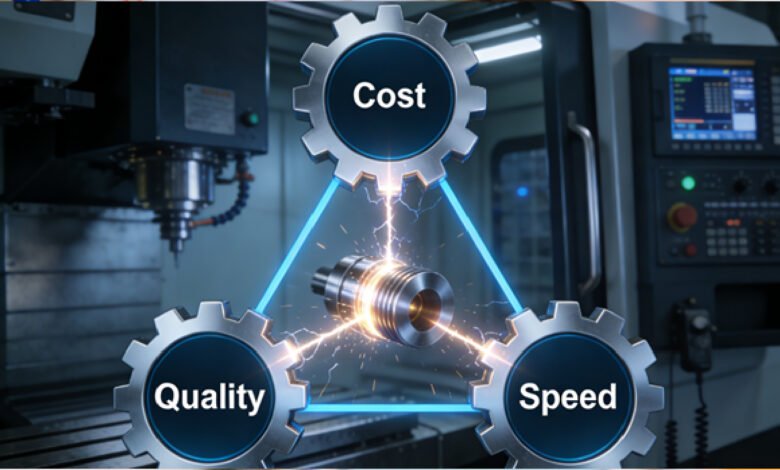
In today’s global supply chain environment, OEMs (Original Equipment Manufacturers) face immense pressure: the need to maintain stringent quality standards and meet urgent deadlines while continuously seeking ways to reduce manufacturing costs. Many enterprises struggle to find balance within the impossible triangle of price, speed, and quality. The root cause often lies in outdated manufacturing processes, inefficient supply chain coordination, and an insufficient understanding of the potential for manufacturing process optimization. Relying on traditional methods or unoptimized outsourcing partners leads to increased hidden costs and elevated project risks.
This article delves into how embracing Industrial Innovation and systematically optimizing Manufacturing Process Optimization, particularly by leveraging efficient OEMCNC turning services, can achieve cost savings, shorten lead times, and enhance component reliability. The following five key strategies provide a clear roadmap for manufacturers seeking a breakthrough.
Why is Manufacturing Process Innovation the Core of OEM Cost Control?
Traditional manufacturing methods are often burdened with significant hidden costs: excessive material allowances lead to waste, multiple machining passes increase time and tooling wear, and reliance on manual expertise causes yield fluctuations. These “invisible costs” continuously erode OEM profit margins. In the modern context, Industrial Innovation is the key to solving this dilemma. It is not merely the adoption of a single technology but the integration of advanced technologies (like smart CNC systems, in-process measurement) with lean production principles to reshape cost structures from the source. This innovation aims for “right-first-time” manufacturing, maximizing the utilization efficiency of materials and energy.
The U.S. Department of Energy (DOE), in its discussion on “Advanced Manufacturing,” states that innovation in manufacturing technology is a core driver for improving national industrial energy efficiency and resource productivity, forming the foundation for long-term competitiveness. For OEMs, this means elevating process innovation from an “option” to a “necessity.” Precision machining technology, especially the continually evolving computer numerical control turning, is the concrete embodiment of Industrial Innovation on the production floor, efficiently and consistently translating design intent into high-quality physical products.
How to Achieve Significant Cost Savings through Manufacturing Process Optimization?
Manufacturing Process Optimization is a systematic engineering effort, with its value evident in every detail from design to delivery. It begins with Design for Manufacturability (DFM) analysis, streamlining unnecessary features and optimizing tolerance specifications to clear obstacles for subsequent manufacturing. Rational material selection and blank stock optimization can directly reduce raw material costs and machining allowances at the source.
At the process level, optimization manifests in process path planning and production scheduling. For instance, a deeply optimized process for OEMCNC turning services can utilize multi-axis capabilities to complete turning, milling, drilling, and even off-center features in a single setup, thereby consolidating operations, reducing setup errors, and minimizing non-cutting time. This directly translates to shorter cycle times, lower tooling costs, and higher consistency. This optimization requires standardized work procedures and data-driven decision support, akin to the framework advocated by the National Institute of Standards and Technology (NIST), enabling continuous improvement and a virtuous cycle of cost reduction through measurable, analyzable manufacturing systems.
What Key Factors Should Be Evaluated When Choosing OEMCNC Turning Services?
Selecting the right partner for OEMCNC turning is a strategic decision. A thorough evaluation should focus on several core dimensions beyond just price, as the lowest quote may hide inefficiencies that lead to higher total cost of ownership.
H3: Technical Capability and Equipment Portfolio
The primary dimension is technical capability, reflected in equipment precision, number of axes, control systems, and size capacity. Different part types require matching equipment: simple shafts may only need efficient 2-axis lathes, while components with complex contours or off-axis features require multi-tasking turn-mill centers with Y-axis, C-axis, or even sub-spindle capabilities. Understanding how to choose the right machine type based on part complexity for OEMCNC turning machiningis fundamental for making an informed decision. A broad material experience base—from stainless steels and alloy steels to exotic alloys and engineering plastics—is equally crucial.
Depth of Quality Control and Certification Systems
Quality control is the lifeline of precision turning services, and international certification systems are an objective measure of their reliability. Beyond basic ISO 9001, evaluate if the supplier holds stringent industry-specific certifications like IATF 16949 (automotive) or AS9100D (aerospace). These certifications signify that the supplier has implemented a comprehensive, traceable, and defect-prevention-focused quality management system. This is key to ensuring batch-to-batch consistency and long-term performance stability for custom CNC turning parts, significantly reducing quality risk for the client.
l The Role of IATF 16949 and AS9100D
These certifications mandate advanced quality planning, rigorous process control, and robust corrective action systems. For an OEM, this translates to reduced incoming inspection burden and higher confidence in part reliability, even for non-automotive or non-aerospace applications.
l Inspection and Documentation
A partner’s investment in advanced metrology (CMM, optical comparators, 3D scanners) and their commitment to providing full inspection reports and material certifications are tangible indicators of their quality ethos.
What Are the Unique Challenges and Solutions for Large or Complex Component Turning?
When component dimensions exceed the norm or geometries are highly complex, OEM large CNC turning services face unique challenges. Large workpieces are prone to deformation under their own weight and cutting forces, poor thermal management leads to dimensional instability, extremely long cycle times place high demands on machine stability, and the precision measurement of large parts is itself a technical challenge.
Addressing these challenges requires targeted solutions and technical expertise. Using heavy-duty, highly rigid horizontal turning centers can effectively resist deformation; a temperature-controlled shop environment ensures thermal stability; in-process measurement technology enables real-time feedback and compensation; and implementing staged machining with stress-relief cycles controls distortion caused by internal stresses. For example, a heavy equipment manufacturer struggled with roundness and coaxiality issues on a large stainless steel housing. By partnering with a specialized provider of OEM large CNC turning services, which employed custom workholding, optimized cutting parameters, and applied in-process measurement, they not only solved the precision problem but also controlled total cost through process refinement. This demonstrates that handling complex custom CNC turning parts requires both the supplier’s technical沉淀 and project management capabilities.
How to Build a Strategic Collaborative Relationship with a Precision Manufacturing Partner?
Moving from a transactional vendor relationship to a strategic manufacturing partnership unlocks long-term value that far exceeds a single quote. This collaborative model fosters joint value engineering analysis, shared responsibility for design changes, and priority access to capacity during shortages.
H3: The Manufacturing Consultant: An Advanced Partner Role
An excellent manufacturing partner acts as a “manufacturing consultant,” proactively participating in early-stage Manufacturing Process Optimization. Leveraging rich industry experience, they can suggest manufacturability improvements during the design phase, avoiding costly changes later. This early involvement is key to maximizing cost savings and compressing timelines. To understand how a specialized partner achieves this role through comprehensive technical capability and quality systems, one can explore the core competencies of professional, high-precision turning services for precision turning.
Measuring Partnership Value Beyond Price
The value of a strategic partner is measured in total cost of ownership (TCO). This includes the cost savings from their optimization suggestions, the risk cost avoided through their quality systems, and the opportunity cost captured through their reliability and responsiveness. A partner like CNC Protolabs, which integrates engineering support with a certified quality system, exemplifies this value-driven approach.
l Transparent Communication and IP Protection
Clear communication protocols and strong intellectual property protection agreements are the bedrock of trust, enabling open sharing of information necessary for deep collaboration.
l Long-term Roadmap Alignment
Discussing future capacity needs, technology roadmaps, and continuous improvement goals aligns both parties for sustained success, transforming the supplier into a true extension of the OEM’s manufacturing arm.
Conclusion
Facing relentless cost and delivery pressures, proactively embracing Industrial Innovation and systematically implementing Manufacturing Process Optimization has become an essential path for OEMs to build a core advantage. By entrusting precision manufacturing stages, especially OEMCNC turning services, to expert partners with specialized technology, rigorous quality systems (like IATF 16949, AS9100D), and optimized processes, enterprises can effectively break the “cost-quality-delivery” iron triangle dilemma and achieve sustainable competitive enhancement.
Is your next manufacturing project also facing optimization challenges? Immediately engage with a professional manufacturing solutions provider like CNC Protolabs to obtain a free manufacturability analysis and optimization proposal for your custom CNC turning parts, taking the first step towards reducing costs and increasing efficiency.
Author Bio
This article’s author is an industrial solutions expert with over 15 years of experience in the precision manufacturing field, long focused on manufacturing process optimization and supply chain efficiency improvement, dedicated to helping manufacturers achieve business growth through technological innovation.
FAQs
Q1: From which aspects can cost-saving effects typically be seen most quickly in manufacturing process optimization?
A1: The fastest effects usually come from Design for Manufacturability (DFM) optimization and improvement in material utilization. Optimizing part design to reduce unnecessary machining features and selecting more efficient blank specifications can directly lower material costs and machining hours, with immediate results.
Q2: Are OEM turning services cost-effective for small-batch, high-mix R&D projects?
A2: Yes, they are. Professional OEM turning service providers are typically equipped with flexible manufacturing systems capable of rapid program changeovers. Their value lies in eliminating your high fixed investment in purchasing equipment and training personnel; you only pay for the actually produced parts, making them especially suitable for design validation during the R&D phase.
Q3: How important are IATF 16949 and AS9100D certifications for non-automotive or non-aerospace customers?
A3: Extremely important. These are among the most stringent quality management system standards in the industry. Choosing a supplier with such certifications means their process control, documentation traceability, and continuous improvement capabilities have reached top-tier levels. This can bring exceptionally high-quality reliability and risk mitigation to your products in any industry.
Q4: How do you determine if a part is suitable for manufacturing with CNC turning process?
A4: The primary criterion is the part’s geometric features. If the main body of the part is rotationally symmetrical (e.g., shafts, sleeves, rings, disks) or its features (holes, grooves, threads) are distributed around a central axis, it is very suitable for turning. For complex combined bodies, multiple processes like milling may need to be integrated.
Q5: When seeking external manufacturing services, what should be prioritized besides price?
A5: Technical communication capability, quality control systems, and supply chain transparency should be prioritized. A partner who can deeply understand your requirements, proactively provide optimization suggestions, and has a complete inspection process and transparent production feedback will, in the long run, significantly reduce total cost and project risk compared to a supplier that merely offers a low quote.