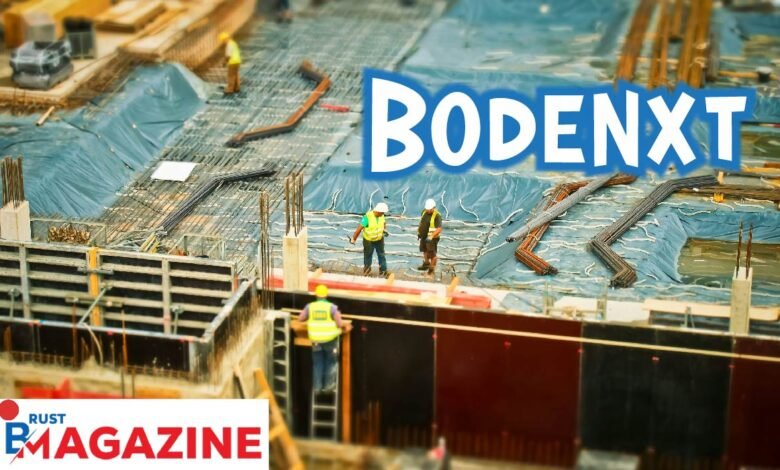
Bodenxt is a long-term municipal transformation platform launched by the city of Boden in northern Sweden, designed to coordinate green industrial expansion, infrastructure development, workforce growth, and sustainable community planning under one integrated strategy. Rather than focusing on a single factory or short-term investment wave, Bodenxt aligns heavy industry, renewable energy, housing construction, digital systems, and public services into one structured growth model.
This initiative responds to rapid industrial acceleration in northern Sweden and ensures that social systems grow alongside economic expansion. Many people search for Bodenxt because of its connection to green steel production, hydrogen technology, and large-scale industrial development in the region. Others look for information about jobs, housing opportunities, and long-term sustainability plans.
What Is Bodenxt?
Bodenxt is a coordinated growth and transformation initiative led by the municipality of Boden, Sweden, aimed at accelerating industrial expansion and sustainable urban development simultaneously. It operates as a strategic platform that integrates heavy industry, renewable energy systems, public infrastructure, and housing development under one long-term municipal plan. The initiative compresses decades of projected growth into a shorter timeline while maintaining environmental and social stability.
Bodenxt is not a single company, nor does it represent only a steel facility. It functions as a multi-sector initiative that includes industrial land planning, workforce preparation, digital infrastructure, transportation networks, and sustainable community development. The model emphasizes long-term coordination rather than reactive expansion. Through structured alignment between public authorities and private investors, Bodenxt creates a stable foundation for industrial transformation without sacrificing livability.
Why Bodenxt Was Created
Northern Sweden possesses a surplus of renewable electricity generated from hydroelectric and wind sources. This energy advantage attracts energy-intensive industries seeking low-carbon production environments. At the same time, global demand for decarbonized steel has increased sharply as industries face climate targets. Hydrogen-based steel production requires stable renewable electricity, and the Boden region offers that capacity.
However, unmanaged industrial growth often produces housing shortages, labor market imbalances, and infrastructure strain. Without proactive coordination, municipalities face congestion, rising costs, and social pressure. Bodenxt addresses these risks by aligning housing development, workforce expansion, grid scaling, and transportation upgrades before production reaches full capacity. The initiative therefore responds to both opportunity and structural risk within the green industrial transition.
Read More :
Foenegriek: Benefits, Dosage & Science Guide
The Five Core Pillars of Bodenxt
1. Skills Supply & Workforce Development
Bodenxt prioritizes technical training programs that prepare residents for emerging industrial roles. Partnerships with vocational institutes and universities ensure alignment with hydrogen technology, logistics management, and advanced manufacturing. Reskilling initiatives support local residents transitioning into new sectors. Talent attraction programs draw engineers and specialists to the region. This workforce coordination strengthens long-term competitiveness.
2. Living & Housing Growth
Rapid population growth requires housing expansion. Bodenxt supports new residential construction and sustainable housing design. Urban zoning processes accelerate development while maintaining environmental standards. Mixed-use neighborhoods promote work-life balance. Coordinated housing supply prevents shortages that could destabilize growth.
3. Business & Economic Development
Small and medium-sized enterprises integrate into the expanding industrial ecosystem. Supply chain creation strengthens regional resilience. Startup initiatives encourage innovation within logistics, energy storage, and digital monitoring systems. Public-private collaboration drives diversified economic growth beyond heavy industry.
4. Infrastructure Innovation
Railway expansion enhances export capacity. Logistics hubs streamline goods movement. Digital infrastructure supports industrial automation and smart city systems. Energy grid scaling ensures reliable electricity distribution. Coordinated infrastructure investment reduces systemic bottlenecks.
5. Social & Environmental Sustainability
Climate-neutral projects anchor the transformation strategy. Green manufacturing practices reduce emissions. Resource efficiency guides construction and operations. Community engagement ensures that economic expansion aligns with social stability.
The Industrial Core – Green Steel and Hydrogen
The most visible industrial anchor within Bodenxt involves large-scale green steel production developed by Stegra, formerly known as H2 Green Steel. This facility uses hydrogen-based direct reduction technology instead of coal-based blast furnaces. By replacing fossil fuels with renewable electricity and green hydrogen, production aims to reduce carbon emissions by up to ninety-five percent compared with conventional steelmaking.
The facility targets an annual production capacity of approximately five million tonnes of steel. Steel manufacturing contributes roughly seven percent of global carbon emissions. Therefore, this technological shift represents a structural change rather than incremental improvement. The industrial park supports hydrogen generation, energy distribution, and rail logistics within one integrated area.
Boden Industrial Park Overview
Boden Industrial Park spans approximately 550 hectares, making it one of the largest planned green industrial zones in Europe. The site includes integrated rail connectivity that links directly to export routes. Grid integration supports renewable energy scaling. Below-ground planning aligns utilities, pipelines, and digital infrastructure before surface development expands.
| Metric | Data Point | Significance |
|---|---|---|
| Industrial Land | ~550 hectares | Large-scale integrated planning |
| Steel Capacity | ~5 million tonnes/year | Industrial-scale decarbonization |
| Emission Reduction | Up to 95% lower | Major climate impact |
| Direct Jobs | ~2,000 projected | Labor market transformation |
This coordinated planning reduces long-term operational risk and enhances scalability.
Economic Impact of Bodenxt
Bodenxt is expected to generate approximately two thousand direct industrial jobs by 2030. Indirect employment across construction, services, logistics, and supply chains will expand further. Population growth strengthens the municipal tax base. Secondary industries such as digital monitoring systems and hydrogen storage innovation create additional economic layers. Economic diversification improves resilience against single-industry dependency.
Infrastructure Expansion Under Bodenxt
Rail infrastructure completion enhances export capacity. Energy systems scale to support hydrogen production. Pipeline planning ensures hydrogen distribution efficiency. Logistics networks optimize industrial throughput. Digital connectivity supports automation and industrial data systems. Infrastructure precedes production expansion to prevent capacity strain.
Sustainability and Climate Goals
Fossil-free steel production anchors climate objectives. Renewable electricity forms the energy backbone. Hydrogen technology reduces carbon intensity. Urban planning integrates green spaces and energy-efficient housing. Climate resilience strategies protect long-term stability.
Risks and Challenges Facing Bodenxt
Energy pricing volatility may influence production costs. Global steel demand cycles affect revenue stability. Workforce relocation challenges require continuous recruitment efforts. Supply chain disruptions pose operational risk. Global economic downturns could slow investment momentum. Balanced planning reduces exposure to these risks.
Bodenxt vs Traditional Industrial Growth Models
| Feature | Bodenxt Model | Traditional Model |
|---|---|---|
| Planning | Integrated | Reactive |
| Housing | Coordinated | Delayed |
| Energy | Renewable-first | Fossil-based |
| Workforce | Pre-planned | Afterthought |
| Sustainability | Core pillar | Secondary |
This comparison illustrates structural differences in long-term resilience.
Global Significance of Bodenxt
Bodenxt offers a replicable blueprint for green industrial transformation. European decarbonization strategies require scalable industrial solutions. Coordinated municipal planning aligns policy with infrastructure investment. Other regions study this model as a benchmark for integrated growth.
Future Outlook of Bodenxt
By 2030, full steel production aims to operate at scale. Population projections indicate sustained growth. Hydrogen ecosystem expansion may attract secondary industries. Alignment with European Union climate policy strengthens long-term relevance. Continuous innovation will determine durability beyond initial industrial expansion.
Final Thoughts
Bodenxt represents integrated transformation rather than isolated industrial growth. It aligns green re-industrialization with coordinated municipal strategy. Through synchronized planning across housing, infrastructure, workforce, and sustainability, the initiative establishes a long-term structural shift. If execution remains disciplined, Bodenxt will stand as a benchmark for climate-aligned industrial development in the twenty-first century.
Frequently Asked Questions
What is Bodenxt?
Bodenxt is a municipal transformation platform in northern Sweden that coordinates industrial expansion, housing development, infrastructure growth, and sustainability planning under one long-term strategy.
Where is Bodenxt located?
Bodenxt operates in Boden, a municipality in northern Sweden known for renewable energy capacity and green industrial development.
Is Bodenxt part of H2 Green Steel?
Bodenxt is not a company. It supports projects such as Stegra’s green steel facility but functions as a broader municipal framework.
How many jobs will Bodenxt create?
Approximately two thousand direct industrial jobs are projected by 2030, with additional indirect employment across related sectors.
Is Bodenxt sustainable?
Yes. The initiative prioritizes renewable electricity, hydrogen-based production, climate-neutral planning, and integrated environmental policy.
Visit For More Info : Brust Magazine