Key Takeaways
- Consistent inspections help identify hazards and maintain the reliability of lift equipment.
- Compliance with OSHA and related safety standards reduces liability and supports workplace safety culture.
- Advanced technologies play a vital role in enhancing inspection precision and efficiency.
Ensuring the safety of lift equipment in industrial environments is a critical responsibility for facility managers and operators. Workplace incidents caused by equipment failures are not only costly but also life-threatening. By conducting regular inspections and adhering to established guidelines, organizations can significantly mitigate risks and promote safer operations. Beyond compliance, inspections are a proactive way to avoid costly downtime and protect workers’ well-being. For those seeking to take the next step, professional lift equipment certification provides the expertise needed to ensure lift operations meet industry-leading standards.
Beyond regulatory requirements, safety inspections of lift equipment help extend the lifespan of the equipment and keep insurance premiums in check. Unsafe conditions left unidentified can result in significant operational interruptions and legal consequences. By following a structured approach, companies ensure that both their employees and investments are protected against avoidable hazards.
Importance of Regular Inspections
Routine inspections are a frontline defense against accidents in material handling and construction environments. By identifying worn parts, leaks, and mechanical failure points before operation, routine checks allow teams to address issues early and avoid unsafe conditions. Evidence shows that lift truck accidents are often preventable through systematic inspection programs, which means that maintenance teams need to remain vigilant and committed to recurring reviews. Regular checks also ensure that all safety systems, like emergency brakes and backup alarms, are functioning as intended. According to the National Institute for Occupational Safety and Health (NIOSH), routine and systematic inspections are among the most effective ways to reduce workplace incidents involving lifts.
Compliance with OSHA Standards
Meeting OSHA’s updated aerial lift safety requirements is a legal and moral necessity for employers. The 2025 OSHA update places greater emphasis on operator training, prompt documentation, and site-specific risk assessments. Companies that fall short risk substantial fines and, more seriously, expose workers to undue hazards. Workplace leaders should prioritize updating their safety programs to comply with the latest regulations and ensure all operators are familiar with the new procedures. Establishing a culture where compliance is non-negotiable reinforces safety as a core company value, reducing both injuries and liability.
Pre-Operation Checks
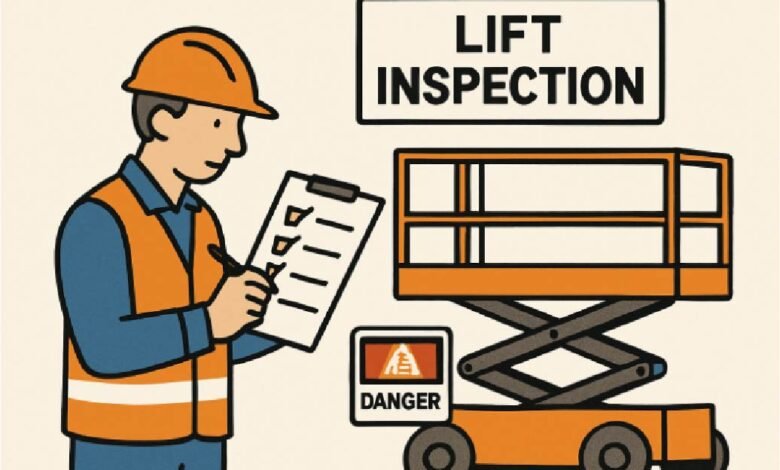
Operators should begin every shift with a comprehensive pre-operation checklist. This process helps spot problems before they can evolve into serious breakdowns or accidents. A standard pre-operation check includes:
- Inspecting tires and wheels for cracking, excessive wear, or embedded debris.
- Surveying hydraulic components for leaks or pressure loss.
- Testing all safety features, including brakes, alarms, lights, and the emergency stop system.
- Verifying the security of guardrails, safety chains, and fall arrest systems.
Only after the equipment passes all these checks should an operator proceed with scheduled tasks. Failing to spot even a minor defect can result in significant malfunctions over time, leading to expensive repairs or worse, worker injuries.
Utilizing Advanced Inspection Technologies
Emerging technologies are revolutionizing the way lift inspections are performed. Inspection robots, drones, and AI-driven analytics offer high-precision assessments, reducing human error and missed defects. These technologies enable remote monitoring and data-driven insights, empowering maintenance teams to act fast on real-time findings. For example, intelligent robotics equipped with magnetic sensors can navigate tight spaces and report on structural integrity, thereby enhancing the thoroughness of an inspection. As noted by EHS Today, such innovations greatly increase both safety and efficiency during assessment processes.
Training and Certification
Ongoing training and certification are non-negotiable for safe operation. Operators must be trained not only in equipment operation but also in hazard recognition, emergency response, and safe maneuvering practices. Proper certification demonstrates an operator’s proficiency and reinforces the organization’s commitment to safety. Refresher courses should be part of a continuous improvement program to ensure compliance with evolving regulations. Companies that embrace thorough training experience fewer incidents, improved morale, and greater operational reliability.
Record-Keeping and Documentation
Accurate, up-to-date inspection and maintenance records serve both legal and operational objectives. Digital record-keeping simplifies data management, streamlines compliance audits, and gives employers a clear view of equipment health over time. Digital solutions help keep inspection logs organized and readily accessible in case of an incident or regulatory review. These records are indispensable for refining inspection routines and can support defense in the event of litigation or insurance claims.
Emergency Response Planning
Even the best safety programs cannot eliminate all risk, making it essential to prepare for emergencies. A written emergency response plan details specific roles, contact numbers, evacuation routes, and immediate medical steps. Regular drills and team briefings help solidify these protocols, reducing panic and improving the chances of positive outcomes. Every employee working with or near lift equipment should be familiar with these procedures to ensure swift and coordinated action during a crisis.
Final Thoughts
Following best practices for lift equipment safety inspections is essential for fostering a safe and productive workplace. Adopting a disciplined approach, one that includes regular inspections, adherence to OSHA standards, comprehensive training, advanced inspection technologies, diligent record-keeping, and in-depth emergency planning, ensures risks are minimized and operational integrity is preserved. This multifaceted commitment to safety forms the foundation of an effective safety culture and reliable lift operations.