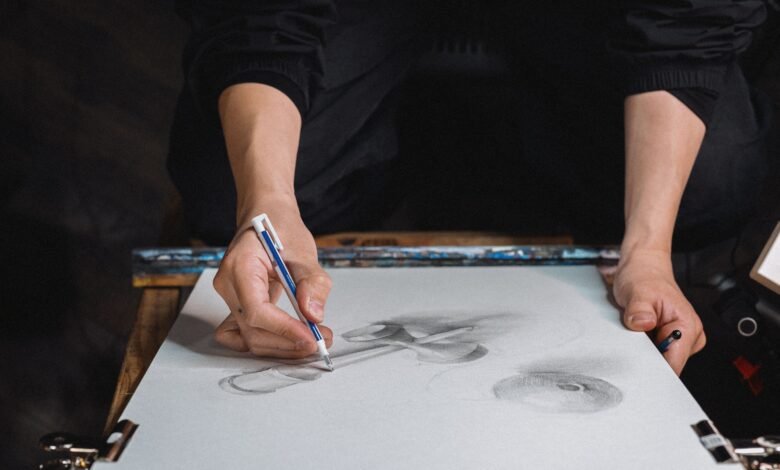
Sketch books are most often linked with art lessons, but their value goes much further. They help pupils observe, plan, record, test and reflect. These skills are useful not only in art, but also in design technology, science, geography, history and wider project work.
In schools, creative thinking needs structure. Pupils need space to explore ideas, but they also need a way to keep their work organised. Sketch books provide both. They give pupils a place to try things out while keeping their learning journey together.
For UK classrooms, sketch books are a practical and flexible resource that can support pupils at many different stages.
A Place for Ideas to Grow
Creative work develops through practice. Pupils often need to sketch several ideas before choosing the one they want to develop. They may test colours, compare shapes, make notes, collect references and change their plans.
This process is much easier when pupils have their own sketch book. It gives them a personal space to work through ideas without losing earlier attempts.
Schools can order sketch books from In Class Tomorrow, with A3 and A4 options available for classroom use. The site also stocks art and craft supplies, making it useful for schools that need paper, drawing tools, paints, brushes and other creative materials.
Supporting Observation Skills
Sketch books help pupils learn how to look closely. Observational drawing teaches children to notice shape, size, texture, pattern and detail.
This skill supports art, but it can also help in science and geography. Pupils might sketch leaves, rocks, shells, maps, buildings or objects linked to a topic. Drawing encourages them to slow down and study what they see.
Teachers can use sketch books for quick observation tasks or longer studies. Over time, pupils become more confident at recording visual information.
Useful for Design and Planning
Design projects often involve several stages. Pupils may need to research a theme, sketch initial ideas, test materials, refine a design and explain their choices.
A sketch book gives them one place to manage this work. It can include drawings, notes, labels, measurements, material tests and final plans.
This is useful in art, design technology, textiles and creative media. It also supports problem-solving because pupils can compare different ideas before deciding which one works best.
Encouraging Reflection
Reflection is an important part of learning. Pupils need to understand what worked, what did not and what they could improve.
Sketch books make this easier because pupils can look back at earlier work. They can see how an idea has changed and identify the steps that led to the final outcome.
Teachers can encourage short written notes alongside practical work. These notes do not need to be long. A few sentences about materials, choices or improvements can help pupils think more carefully about their work.
Building Confidence in Creative Subjects
Some pupils find creative subjects intimidating. They may think they are not good at drawing or worry about making mistakes.
Sketch books can help change this mindset. They show that improvement happens through practice. A page does not need to be perfect to be useful. It can be part of the process.
When pupils look back and see how their work has improved, they often become more confident. This confidence can encourage them to try new techniques, use different materials and take more ownership of their ideas.
Sketch Books in Primary Classrooms
In primary schools, sketch books can support art projects, topic work and creative exploration. Pupils can use them for drawing practice, colour mixing, pattern work, seasonal activities and nature studies.
They can also link well with other subjects. A class learning about the Romans might sketch mosaic patterns. A science topic on plants could include labelled drawings. A geography lesson might include landscape sketches or map symbols.
Using sketch books regularly helps children treat creativity as part of learning, not just an occasional activity.
Sketch Books in Secondary Classrooms
In secondary schools, sketch books can be used in a more detailed and independent way. Pupils may include artist research, analysis, technique testing, photography contact sheets, design development and written evaluation.
At GCSE level, sketch books are especially important. They show how pupils have researched, experimented and developed ideas. A strong sketch book can help students present their creative process clearly.
For teachers, sketch books provide useful evidence of progress, effort and understanding.
Practical Benefits for Teachers
Sketch books also make classroom management easier. They keep work together, reduce lost sheets and make marking more organised.
Teachers can quickly see which stage of a project each pupil has reached. They can add feedback directly into the book and refer back to earlier work when discussing progress.
Storage is also easier when pupils use the same book format. Schools can organise books by class, year group or project, helping art departments keep resources under control.
Choosing the Right Size
The right sketch book size depends on how it will be used. A4 books are practical for regular classroom lessons because they are easy to store, carry and handle. A3 books are useful for larger drawings, detailed studies and design sheets.
Schools may choose one size for younger pupils and another for older pupils. They may also keep a mix of sizes for different projects.
Paper quality should also be considered. Pencil work, coloured pencils and light sketching may not need the same paper as paint, ink or collage work. Choosing suitable books helps pupils get better results and reduces frustration.
A Resource That Supports More Than Art
Sketch books are a simple but valuable school supply. They support creativity, planning, observation, reflection and independent thinking.
For pupils, they provide a place to practise and improve. For teachers, they offer a clear record of development. For schools, they are a flexible resource that can be used across subjects and year groups.
When sketch books are used well, they help pupils understand that good work takes time, thought and practice. That lesson is useful far beyond the art room.