Key Takeaways
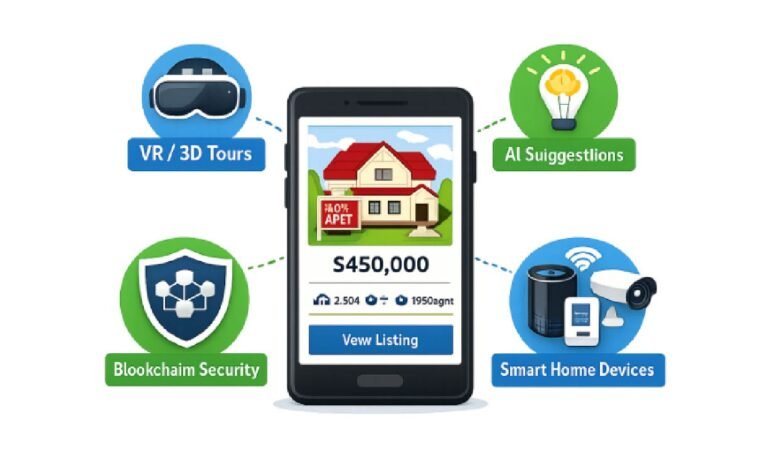
- Virtual reality and 3D tours allow buyers to explore properties remotely.
- AI-powered tools provide personalized property recommendations.
- Blockchain technology enhances transaction security and transparency.
- Mobile apps and online platforms streamline the home search process.
- Smart home technology adds value and convenience to modern homes.
Table of Contents
- Virtual Tours and 3D Walkthroughs
- AI-Powered Property Recommendations
- Blockchain in Real Estate Transactions
- Mobile Apps and Online Platforms
- Smart Home Technology
- Conclusion
In recent years, technology has revolutionized the way we buy homes. From virtual tours to AI-driven recommendations, the home-buying process has become more efficient and accessible. This article explores the key technological advancements transforming the real estate landscape.
For those seeking expert guidance in navigating this tech-driven market, Paradise Valley AZ real estate agent Charlie Yin offers a wealth of experience. With over 15 years in real estate, Charlie has built a diverse portfolio that includes luxury short-term rentals and high-end home-building projects. His deep understanding of the Paradise Valley market makes him a valuable resource for buyers and investors alike.
Virtual Tours and 3D Walkthroughs
Gone are the days when buyers had to visit multiple properties in person. Virtual reality (VR) and 3D tours now offer immersive experiences, allowing potential homeowners to explore properties from the comfort of their own homes. This technology provides a realistic sense of space and layout, making the initial screening process more efficient.
Additionally, the quality of these experiences has drastically improved thanks to advancements in camera technology and digital rendering. Real estate agents can now offer detailed, interactive floor plans and even augmented reality features that overlay furnishings or potential renovations, helping buyers envision a home’s full potential. International and out-of-town buyers have particularly benefited, as they can make informed decisions without the need for costly, time-consuming travel.
AI-Powered Property Recommendations
Artificial intelligence (AI) has made significant strides in personalizing the home-buying experience. By analyzing user preferences and behavior, AI algorithms can suggest properties that align closely with a buyer’s needs and desires. This not only saves time but also increases the likelihood of finding the perfect home.
These AI-driven recommendation engines consider countless data points, such as preferred style, number of bedrooms, proximity to amenities, and even recent browsing activity. Machine learning models adapt to evolving preferences over time, ensuring that users receive suggestions that become more accurate throughout their home search. In addition, chatbots powered by natural language processing can provide instant answers to buyer queries, personalize home search assistance, and facilitate communications between buyers and real estate professionals at any hour.
Blockchain in Real Estate Transactions
Blockchain technology is enhancing the security and transparency of real estate transactions. By providing a decentralized and tamper-proof ledger, blockchain reduces the risk of fraud and streamlines the buying process. Smart contracts, which automatically execute when predefined conditions are met, further simplify transactions.
For buyers and sellers, this means greater trust and reduced reliance on intermediaries. Transactions can be verified and recorded digitally, slashing paperwork and processing times. Title transfers, escrow payments, and property records can all be managed securely on the blockchain, addressing long-standing challenges like title disputes and unauthorized changes to ownership records. As adoption increases, blockchain has the potential to significantly reduce transaction costs and improve overall transparency in the real estate sector.
Mobile Apps and Online Platforms
The proliferation of mobile apps and online platforms has made property searches more accessible than ever. Buyers can filter listings based on specific criteria, schedule viewings, and even apply for mortgages, all from their smartphones. This convenience has significantly accelerated the home-buying process.
Online platforms often integrate features such as neighborhood analytics, crime statistics, local school ratings, and mortgage calculators, providing buyers with comprehensive resources for making informed decisions. Push notifications alert users the moment a suitable property hits the market, and digital document signing tools simplify the offer-submission and closing process. Real estate professionals leverage customer relationship management (CRM) software to track inquiries, automate follow-ups, and nurture relationships, ensuring that no lead is missed and clients receive attentive service throughout their journey.
Smart Home Technology
Modern homes are increasingly equipped with smart technology, offering enhanced convenience and energy efficiency. Features such as automated lighting, climate control, and security systems not only enhance the living experience but also add value to the property. Buyers are now considering these technologies as essential components of their future homes.
In addition to comfort, smart home features can have a tangible impact on a property’s resale value and appeal. Many prospective buyers, especially in luxury markets, expect homes to include devices such as smart thermostats, voice-activated assistants, connected appliances, and integrated entertainment systems. Home security solutions, including smart locks and remote surveillance, are now top priorities for families and professionals alike. Sustainability is also driving the adoption of smart irrigation, energy consumption monitors, and solar integration, allowing homeowners to reduce their environmental footprint while lowering utility costs.
Conclusion
Technology continues to reshape the home-buying experience, making it more efficient, secure, and tailored to individual needs. As these advancements evolve, buyers can look forward to an even more streamlined, personalized journey toward homeownership.
Looking ahead, the integration of artificial intelligence, blockchain, and immersive digital experiences will continue to blur the lines between traditional and digital real estate services. Buyers, sellers, and real estate professionals alike must stay abreast of these changes to remain competitive and take full advantage of new opportunities. Continuous innovation in property technology promises to address pain points such as lengthy approval processes, lack of transparency, and difficulties in matching buyers with their ideal homes.
For anyone embarking on the home-buying journey today, tapping into these technological resources can mean a smoother, less stressful, and ultimately more successful experience. By working with trusted professionals who embrace digital tools and platforms, buyers can ensure that they’re not only keeping pace with market trends but are also leveraging technology to secure the best possible outcomes for their real estate investments.